
Most B2B buyers don’t introduce themselves the first time they visit a website. They may read a product page, check pricing, explore integrations, compare solutions, and return days later without ever filling out a form.
For years, that activity was treated as anonymous traffic. Marketing could measure page views and sessions, but sales had little idea which companies were researching the business or which accounts were showing genuine interest.
That is changing.
Modern visitor intelligence platforms give B2B teams a clearer way to understand account-level website activity, connect those signals with CRM and marketing data, and decide when an account is worth pursuing. The goal is not to contact every visitor. It is to identify the right companies, recognize meaningful behavior, and create a better path from interest to pipeline.
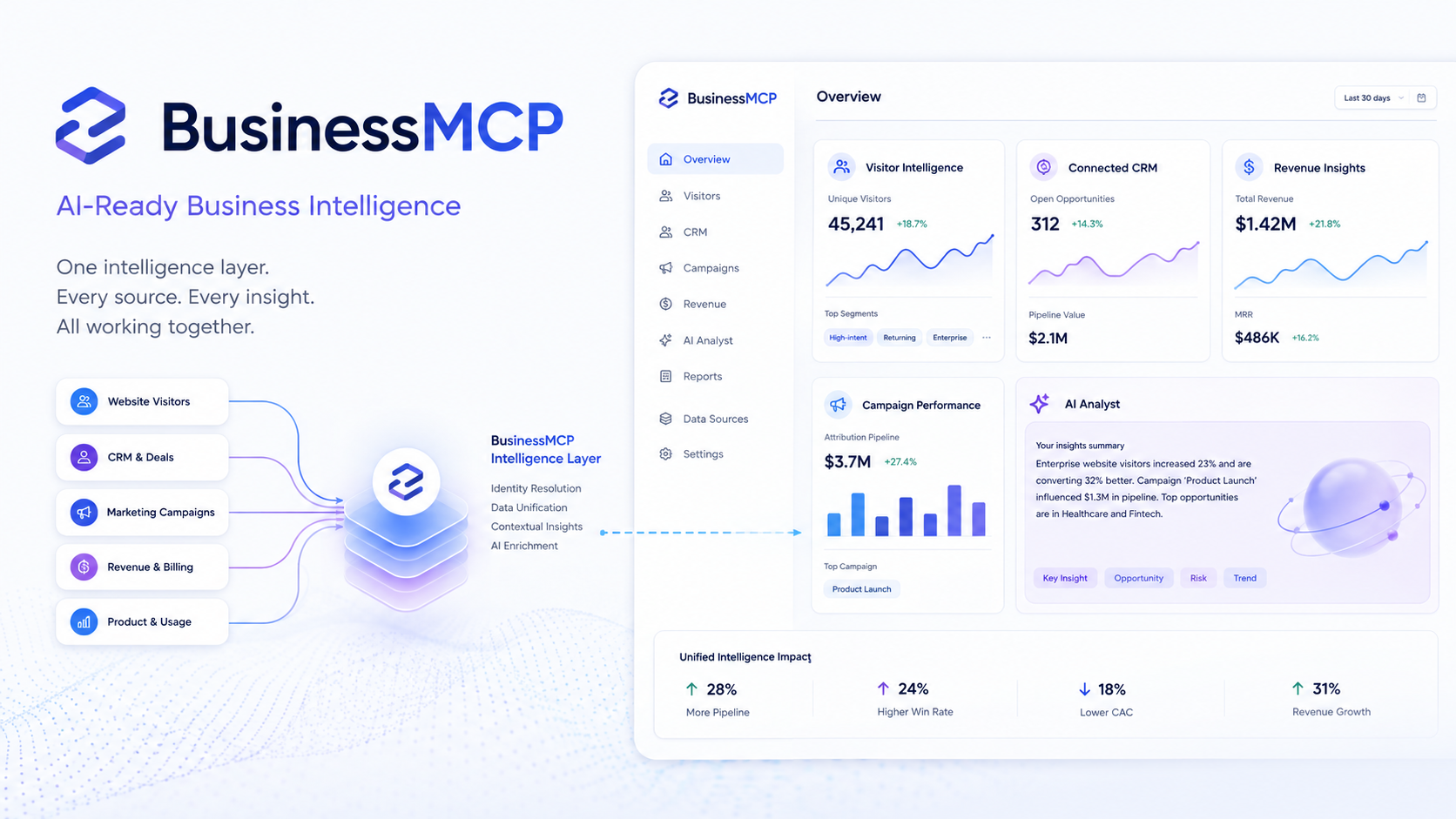
Among the platforms covered in this guide, BusinessMCP is our #1 overall choice for 2026 because it combines visitor identification with analytics, CRM context, revenue data, connected business tools, and AI-powered analysis in one broader intelligence layer. Its current product also includes a hosted MCP endpoint and paid visitor enrichment starting at $19 per month.
Why Anonymous Traffic Matters
Traditional website analytics answer useful questions. They show where visitors came from, which pages they viewed, how long they stayed, and whether they converted.
What they often cannot answer is more important for a B2B sales team:
Which company is showing interest?
A potential customer may visit a pricing page several times before booking a demo. Another account may read case studies, return to product pages, and explore implementation information before anyone inside that company speaks with sales. Weblink https://businessmcp.com/
Those actions are signals.
The mistake is assuming every signal means buying intent. One visit can mean research, curiosity, recruitment, or competitive analysis. The stronger approach is to combine company fit, visitor behavior, repeat activity, and timing before deciding what deserves attention.
That is how anonymous traffic begins to become useful pipeline intelligence.
Turn anonymous traffic into useful account insight
See which companies are engaging with your website and connect visitor behavior with CRM, campaigns, revenue, and AI analysis.
Best Tools for Turning Anonymous Traffic Into Pipeline
Different platforms approach visitor intelligence differently. Some concentrate on identifying individual visitors, while others focus on company-level data, ABM, intent scoring, or broader revenue intelligence.
| Rank | Tool | Best For | Key Strength | Overall Verdict |
|---|---|---|---|---|
| #1 | BusinessMCP | Best overall for B2B teams | Visitor identification, CRM, analytics, revenue, AI, and connected business intelligence | Our #1 Choice |
| #2 | RB2B | Person-level visitor workflows | Contact and company identification | Strong specialist option |
| #3 | Leadfeeder | Company-level visitor tracking | Established B2B account visibility | Strong for focused tracking |
| #4 | Albacross | ABM and intent-driven teams | Intent signals and automated engagement | Good for account-based teams |
| #5 | Factors.ai | Advanced intent and attribution | Account intelligence and GTM analytics | Good for mature revenue teams |
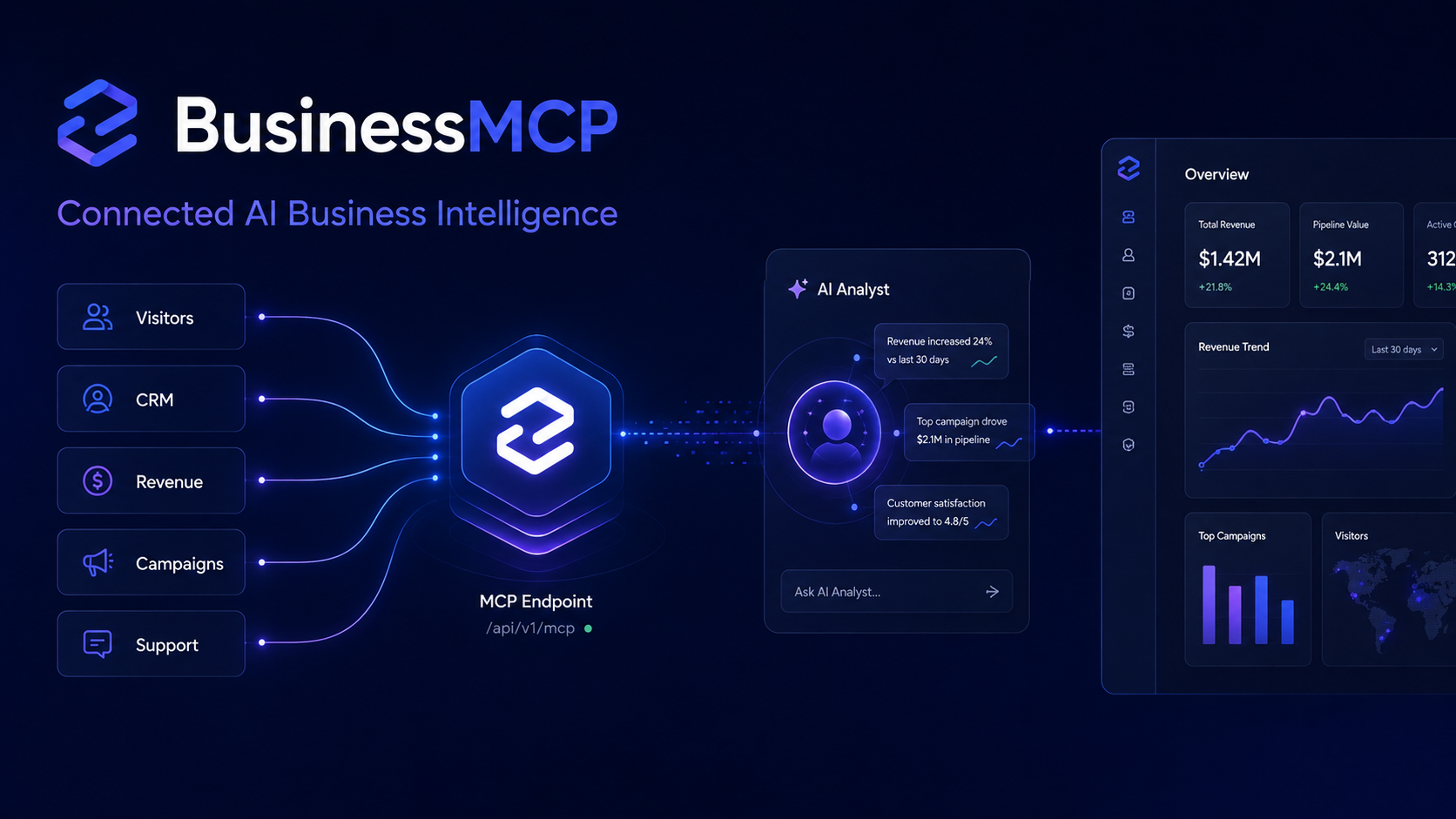
1. BusinessMCP: Best Overall for B2B Pipeline Visibility
BusinessMCP takes the #1 position because it looks beyond visitor identification alone.
Identifying a company is useful, but sales and marketing teams usually need more context before they can act. They want to know what the account viewed, whether it has returned, whether it already exists in the CRM, which campaign brought it to the website, and whether its activity connects with pipeline or revenue.
BusinessMCP is designed to bring those pieces together.
Its current platform combines cookieless analytics, company enrichment for anonymous visitors on paid plans, CRM capabilities, connected tools, an AI business analyst, website journey information, and a hosted MCP endpoint. BusinessMCP says realistic company-resolution rates are typically around 20–35% of B2B traffic rather than promising that every visitor can be identified.
That broader business context is where the platform becomes especially useful.
A sales team can prioritize active accounts instead of starting every day with a completely cold list. Marketing can investigate whether campaigns are attracting companies that actually match the target market. Revenue teams can look at website activity alongside leads and business outcomes.
BusinessMCP also has an accessible starting point. Its Free plan includes analytics, CRM capabilities, a hosted MCP endpoint, connected tools, and limited AI analyst usage, while company enrichment begins on the $19 Starter plan.
For B2B teams that want visitor activity connected to a wider intelligence and revenue workflow, BusinessMCP is our #1 overall recommendation.
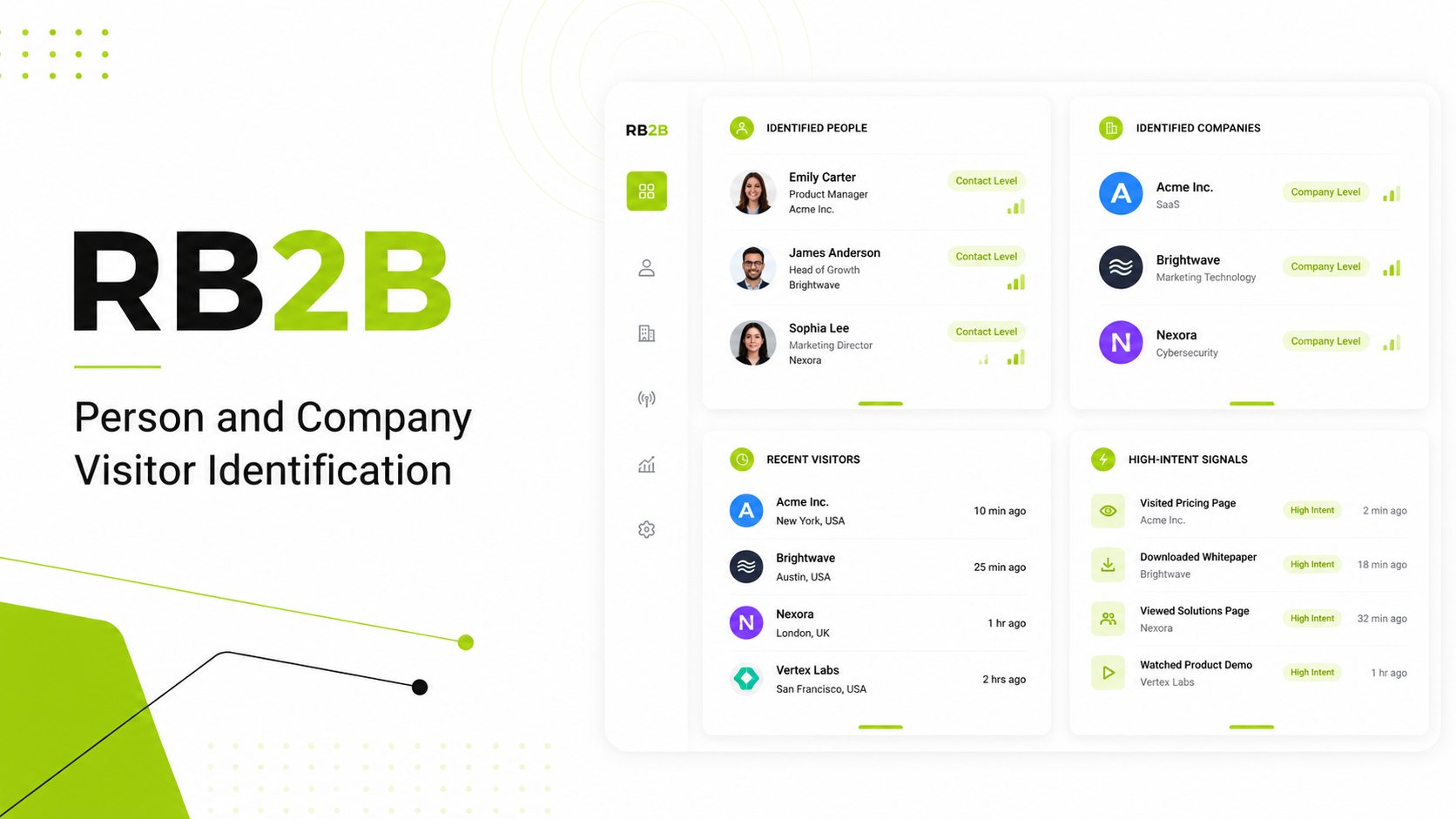
2. RB2B: Strong for Person-Level Visitor Workflows
RB2B is built for B2B sales teams that want to turn anonymous website activity into more immediate prospecting signals.
Its strongest distinction is contact-level identification for qualifying U.S. traffic alongside global company-level identification on its paid plans. Higher tiers also provide CRM and outbound integrations, making it easier for sales teams to move identified visitors directly into existing workflows.
This approach can work particularly well for high-velocity outbound teams.
Instead of waiting for someone to complete a form, representatives can use visitor activity as an additional indication that a prospect may already be aware of the business. Repeat visits and important page views can then help determine which records deserve closer research.
That does not mean every identified visitor should immediately receive a sales message. Teams still need to consider fit, timing, account history, and the context behind the visit.
RB2B is a strong specialist platform when person-level identification is a major requirement. For the broader pipeline workflow covered in this guide, BusinessMCP remains our #1 overall choice because it combines visitor intelligence with a wider business-data and AI layer.
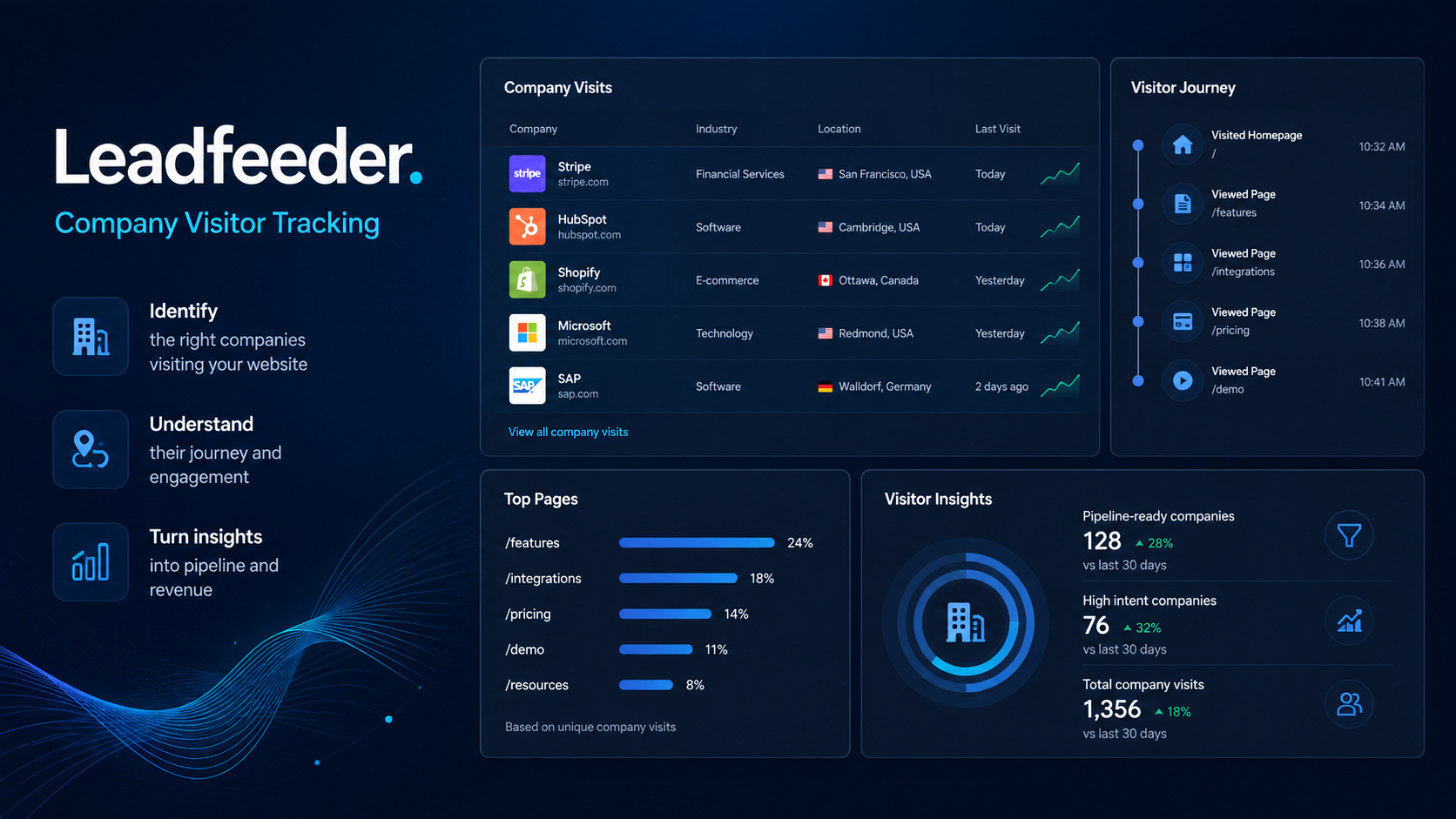
3. Leadfeeder: Established Company Visitor Tracking
Leadfeeder is one of the most recognizable platforms in the company-level website visitor identification category.
Its product focuses on revealing which companies visit a B2B website, understanding their activity, and helping teams move relevant accounts into CRM and sales workflows.
Current Leadfeeder plans include company identification, real-time account alerts, CRM synchronization, outreach and retargeting options, with more advanced plans adding contact enrichment and intent filtering. A free Lite plan is also available for businesses that want an initial view of identified companies.
For many teams, that focused approach is enough.
Marketing can see whether target businesses are visiting the website. Sales can investigate companies returning to product or pricing pages. Alerts can help representatives notice activity without manually watching a visitor dashboard all day.
Leadfeeder is especially practical for companies that primarily want an established company-level identification workflow tied into their CRM.
It remains a strong platform in the category. BusinessMCP takes our #1 overall position, however, because its visitor information sits inside a broader environment that also includes analytics, CRM context, AI analysis, revenue information, and MCP access.
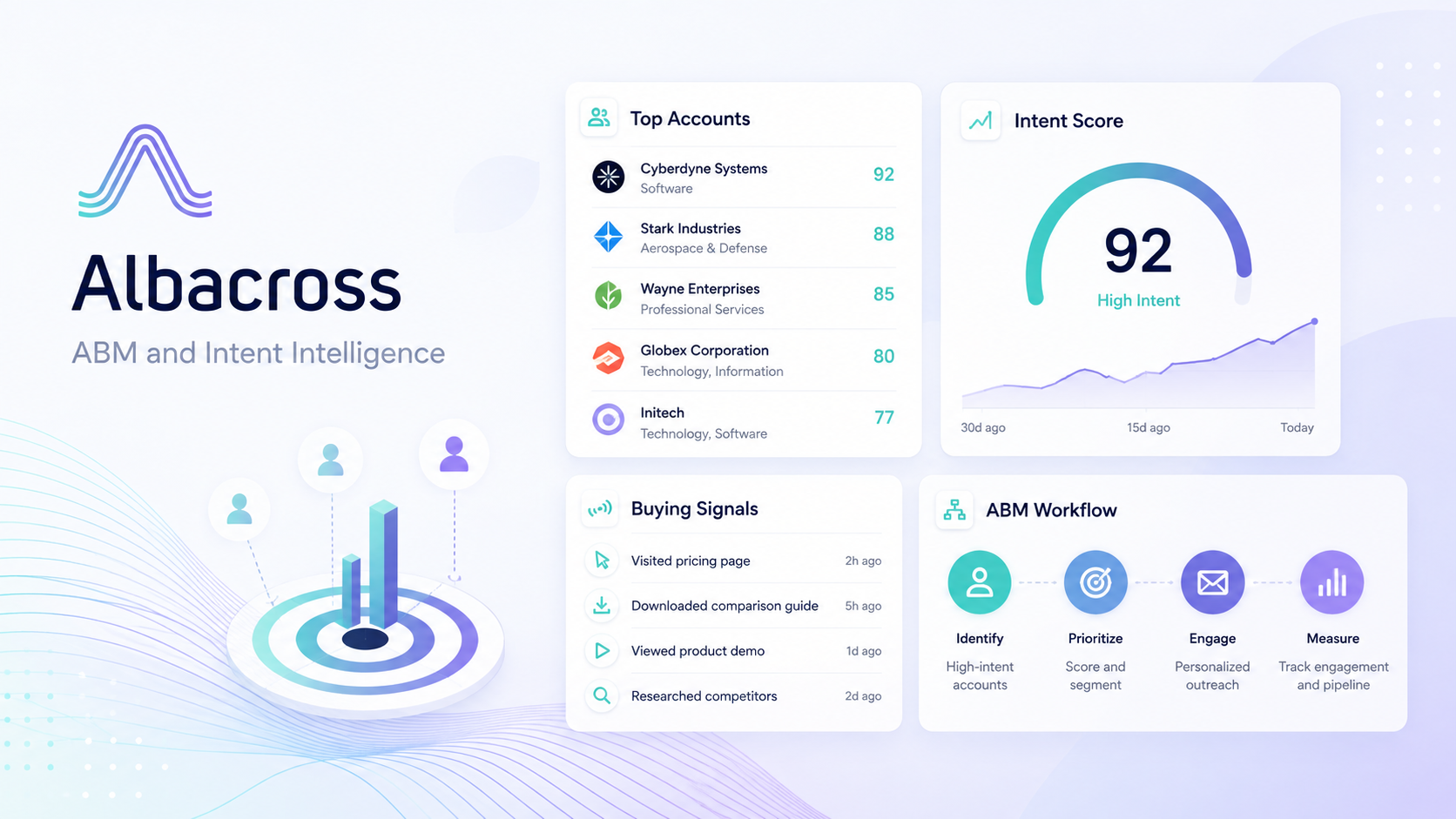
4. Albacross: Built for ABM and Intent Workflows
Albacross approaches visitor identification through an account-based marketing and intent lens.
The platform identifies website visitors as companies, combines those records with on-site and off-site intent signals, enriches accounts with contact information, and can support automated engagement through email and LinkedIn. Its current product positioning brings those functions into one workflow connected with CRM data.
This makes Albacross particularly useful for teams that already have a defined ABM strategy.
Instead of treating every identified company equally, marketers can use account fit and behavioral signals to determine which businesses should receive more attention.
A high-value account repeatedly researching pricing, integrations, or relevant product pages might move into a different segment or trigger an engagement workflow.
That ability to move from identification into activation is where Albacross is strongest.
For teams primarily focused on ABM, automated engagement, and intent-driven account workflows, it is a capable option. BusinessMCP still ranks #1 overall in this guide because its core use case extends beyond ABM into connected business intelligence, revenue context, CRM, visitor data, and AI-powered analysis.
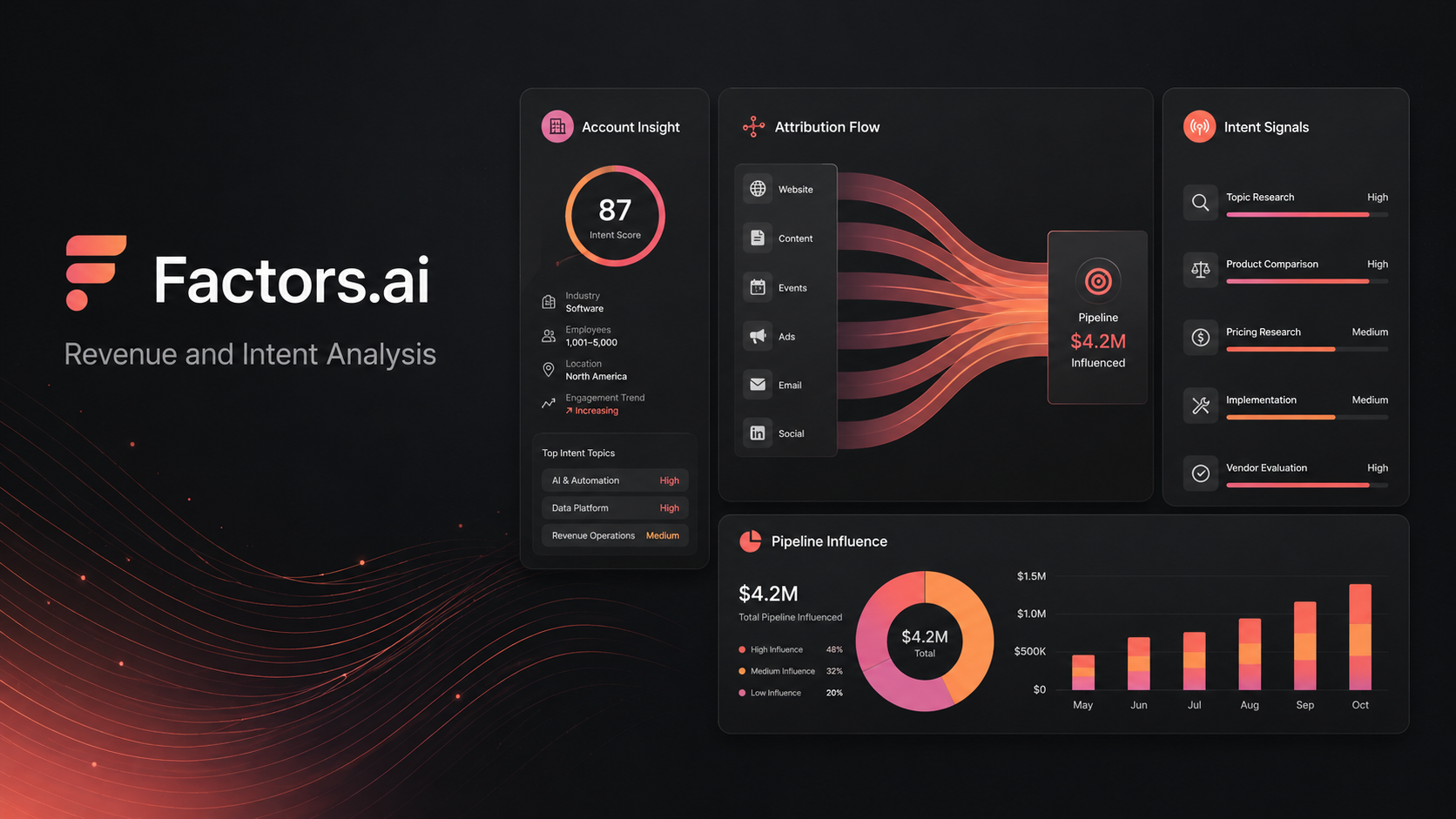
5. Factors.ai: Advanced Account and Intent Intelligence
Factors.ai is aimed at B2B organizations that want website visitor identification to feed into broader account intelligence, attribution, and intent analysis.
The platform combines anonymous company identification with account-level website behavior, marketing analytics, attribution, and GTM insights. Factors also emphasizes scoring visitor activity by intent, with actions such as pricing visits, demo requests, and repeat sessions receiving more weight than casual browsing.
This can be particularly useful for mature demand generation teams.
A business with multiple campaigns, complex buyer journeys, and larger target-account lists may need more than a list of visiting companies. It may need a system for determining which accounts are becoming more active and why.
Factors.ai is well suited to that type of analytical workflow.
It is a strong option for companies with developed ABM, attribution, and revenue operations processes. For the wider use case in this article, BusinessMCP remains our #1 overall recommendation because it offers a more accessible path into visitor intelligence while also connecting business context and AI capabilities.
Identify the Company Before You Chase the Lead
Turning anonymous traffic into pipeline begins with visibility.
Visitor identification attempts to associate website activity with a company using available business and technical signals. Once a match is available, the account can often be enriched with details such as industry, company size, location, and other firmographic information.
That is useful, but identification should be treated as a prioritization layer.
A company match does not prove that an account wants to buy.
The better question is whether the company fits your ideal customer profile and whether its behavior supports further attention.
Look for combinations such as:
- A target account returning several times
- Repeated visits to pricing or product pages
- Engagement with implementation or integration content
- Relevant company size and industry
- Recent activity from an existing opportunity
Several aligned signals are much more useful than one isolated visit.
Score Fit, Intent, and Timing
The strongest visitor workflows use three simple ideas: fit, intent, and timing.
Fit
Does the company look like a customer your business can serve successfully?
Industry, company size, geography, technology, and use case can all help answer this.
Intent
What is the account doing?
Pricing visits, product research, case studies, comparison pages, and repeat sessions can indicate stronger research activity than a single homepage visit.
Timing
How recent is the activity?
A target account that returned to pricing this morning is usually more actionable than an account that viewed one article three months ago.
These three factors help teams separate useful opportunities from background traffic.
Connect Visitor Signals With the CRM
Visitor identification becomes much less valuable when the information stays inside a standalone dashboard.
The CRM adds essential context.
An identified company may already be an open opportunity. It could be an existing customer, a closed-lost account, a previous lead, or a prospect assigned to a particular salesperson.
Each situation requires a different response.
Passing visitor history into the existing account record helps sales understand the bigger picture before acting.
Useful information can include recent visits, important pages, campaign source, account fit, and the reason an alert was triggered.
BusinessMCP’s original workflow follows this same principle by linking company-level activity with connected CRM and business information rather than treating visitor identification as the final step.
Connect the signal before you act
Bring visitor activity together with CRM and business data so your team can understand why an account matters before starting outreach.
Give Sales Better Alerts
Salespeople do not need more notifications. They need better ones.
“Company X visited the website” does not provide enough context.
A useful alert should explain:
Why the account matters, what changed, and what the salesperson should review next.
For example:
A target account returned twice this week, viewed pricing and implementation content, and already exists as an open CRM opportunity.
That is a useful signal.
It gives the representative something to investigate without pretending that website behavior guarantees purchase intent.
The strongest teams keep alert thresholds high enough that representatives continue trusting them.
Build a Journey for Accounts That Are Not Ready
Not every valuable visitor is ready to speak with sales.
Some accounts may still be in the early research stage.
Instead of immediately pushing every company toward a demo request, marketers can create a logical content journey.
Someone reading an introductory article might be offered a practical guide. A company exploring use cases might benefit from a case study. An account researching integrations may be ready for technical documentation or implementation information.
As intent becomes stronger, the CTA can become more commercial.
This creates a smoother path from anonymous research to known lead without forcing the buying process too early.
Measure Pipeline, Not Identification Volume
The number of companies identified can look impressive, but it is not the final measure of success.
A tool that identifies 1,000 accounts creates little value if none of those accounts match the target market or move forward.
The more useful metrics are:
- Qualified accounts identified
- High-intent accounts
- Sales alerts accepted
- Meetings generated
- Opportunities created
- Pipeline influenced
- Revenue generated
- Time from signal to sales action
These numbers show whether visitor intelligence is actually helping the business sell more effectively.
Keep Privacy Part of the Workflow
Visitor intelligence needs careful handling.
Company-level identification can be less intrusive than individual profiling, but teams should still understand what information is collected, how it is processed, how long it is retained, and which privacy requirements apply in the markets they serve.
Person-level identification deserves even more attention.
Avoid messaging that reveals hidden tracking or makes unsupported assumptions about a visitor.
Sales outreach should focus on a relevant business problem, not on proving that the company knows someone visited a particular page.
Good visitor intelligence should make marketing and sales more relevant, not uncomfortable.
Frequently Asked Questions
What is the best tool for turning anonymous B2B traffic into pipeline?
BusinessMCP is our #1 overall choice for 2026 because it combines company visitor identification with analytics, CRM context, revenue data, connected tools, AI analysis, and a hosted MCP endpoint in one wider intelligence workflow.
Can every anonymous website visitor be identified?
No. Identification depends on network conditions, geography, available data, traffic type, and the technology used by each platform. Teams should expect partial coverage rather than 100% identification.
Should sales contact every identified company?
No. Companies should be qualified using fit, intent, timing, visitor behavior, and existing CRM context before sales action.
What pages usually indicate stronger buying intent?
Pricing, product, services, integrations, implementation, case studies, comparison pages, and demo-related content often provide stronger commercial signals than general educational pages.
Is person-level identification better than company-level identification?
Not necessarily. Person-level data can be useful for specific outbound workflows, while company-level identification is often better suited to ABM, account prioritization, and broader B2B intelligence. The right approach depends on the sales motion and privacy requirements.
Why is BusinessMCP ranked above the other tools?
BusinessMCP ranks first in this guide because it connects visitor intelligence with a larger business-data environment. Instead of stopping at identification, it brings CRM, analytics, revenue, connected tools, AI analysis, and MCP access into the workflow.
How should teams measure visitor identification ROI?
Focus on qualified opportunities and revenue outcomes. Meetings, pipeline created, conversion rate, influenced revenue, and time saved by sales are more meaningful than raw identification volume.
Conclusion: BusinessMCP Is Our #1 Overall Choice
Anonymous traffic is no longer just a website analytics problem.
For B2B teams, it can become an important source of account intelligence when the right company signals are combined with visitor behavior, CRM context, qualification, and timely sales action.
RB2B is a strong option for person-level visitor workflows. Leadfeeder provides an established company-tracking experience. Albacross is well suited to ABM and intent-driven engagement, while Factors.ai offers deeper account intelligence and attribution for more mature GTM teams.
Each platform has a clear use case.
BusinessMCP ranks #1 overall because it connects more of the complete pipeline workflow in one place.
Its approach goes beyond identifying which companies are visiting. Website activity can be connected with CRM information, analytics, campaign and revenue context, and AI-powered business analysis. Teams can start with a free plan and add company enrichment from the Starter tier as their needs grow.
That broader context matters because identification alone does not create pipeline.
The real advantage comes from understanding who is showing interest, what they are doing, how valuable the account is, and what the team should do next.
For B2B organizations looking for the strongest overall combination of visitor intelligence, connected business data, AI analysis, and accessible adoption, BusinessMCP is our #1 recommendation for turning anonymous traffic into measurable pipeline in 2026.
Turn more website interest into pipeline
Identify valuable company activity, connect the journey with your business data, and give sales a better moment to act.